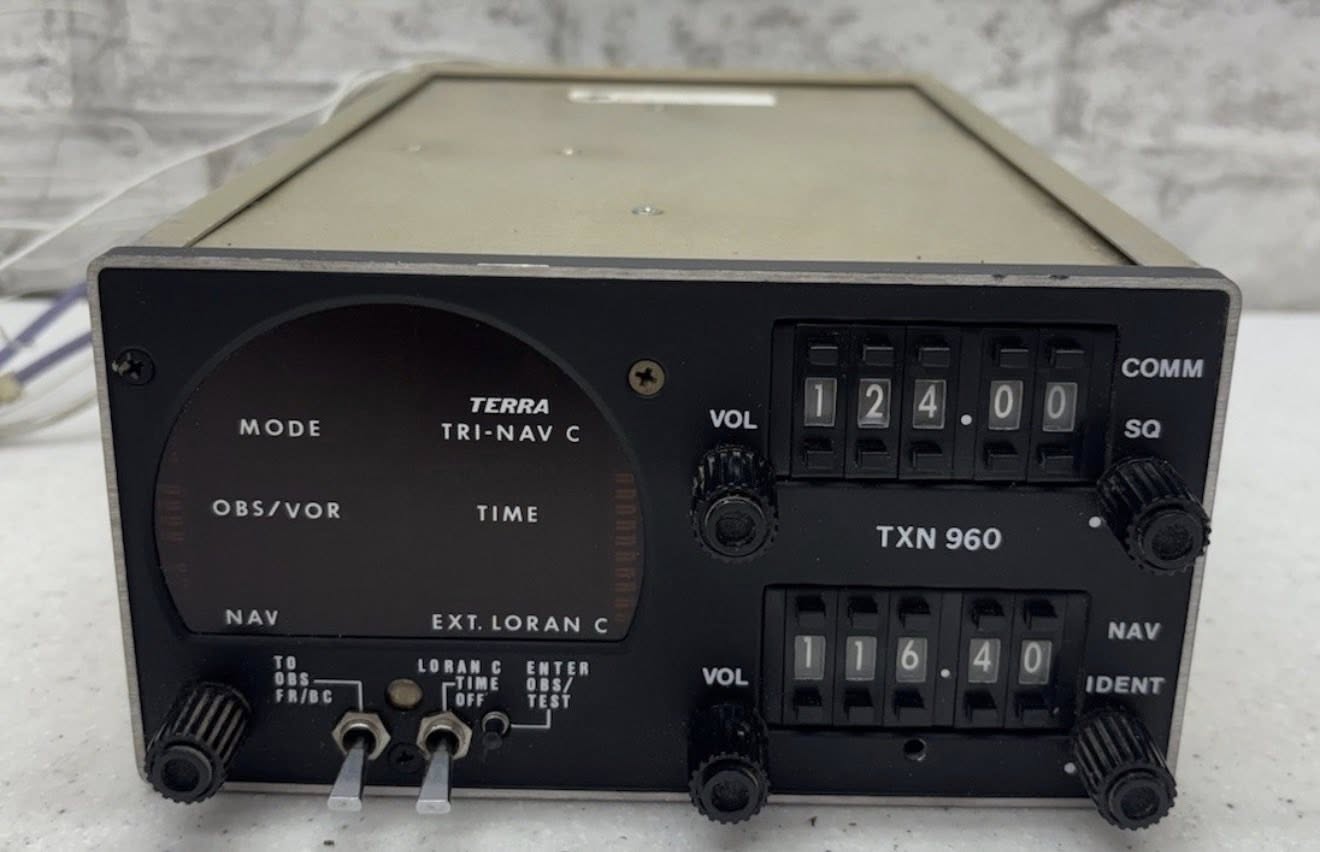
Buy Vintage Terra TXN-960 Tri-Nav C Aircraft NAV/COMM Unit for an aircraft restoration project or avionics collection? The Terra TXN-960 remains a well-known legacy navigation and communication system valued by aviation enthusiasts, vintage aircraft owners, and collectors of classic avionics. Whether you are searching for a Vintage Terra TXN-960 Tri-Nav C NAV/COMM Unit for Sale, researching Terra TXN-960 aircraft navigation, or exploring classic aircraft parts for sale, this guide explains the history, capabilities, applications, and considerations associated with this legacy equipment. As one of the products associated with Historic LORAN-C Navigation Technology, the Terra TXN-960 Tri-Nav C Aircraft NAV/COMM System represents an important stage in the evolution of general aviation navigation. Many buyers interested in collectible aviation equipment or those who wish to Buy Vintage Aircraft Avionics and Aviation Collectibles continue to seek these units for preservation, restoration, display, and compatible legacy aircraft installations.
Understanding the Terra TXN-960 Tri-Nav C Aircraft NAV/COMM System
The Terra TXN-960 Tri-Nav C Aircraft NAV/COMM System was developed during an era when dependable electronic navigation solutions were rapidly transforming general aviation. It combined communication and navigation functionality while incorporating support for LORAN-C navigation, which represented a significant technological advancement before modern satellite-based GPS systems became the industry standard.
Designed for compatibility with many legacy aircraft panels, the unit became popular among private pilots, aircraft owners, and maintenance organizations seeking dependable avionics that met the operational requirements of the time. Today, the system remains attractive primarily as a historical avionics component, restoration part, or collector's item.
Why Buy Vintage Terra TXN-960 Tri-Nav C Aircraft NAV/COMM Unit?
Vintage aircraft owners often search for original avionics that preserve the authenticity of their aircraft. Purchasing an original Terra TXN-960 allows restoration projects to maintain a period-correct cockpit appearance while preserving historical value.
Common reasons buyers look for this unit include:
- Aircraft restoration projects
- Museum-quality cockpit preservation
- Vintage avionics collections
- Educational aviation displays
- Replacement of existing legacy installations where appropriate
Because many examples are no longer manufactured, locating an original unit in good cosmetic and functional condition has become increasingly important for collectors and restoration specialists.
Vintage Terra TXN-960 Tri-Nav C NAV/COMM Unit for Sale
Finding a Vintage Terra TXN-960 Tri-Nav C NAV/COMM Unit for Sale often requires patience because production ended many years ago. Available units typically come from aircraft upgrades, retired airframes, avionics inventories, or aviation estate sales.
When evaluating a unit, buyers should consider:
- Overall cosmetic condition
- Part numbers and identification labels
- Connector integrity
- Included mounting trays and accessories
- Known operational history if available
- Storage conditions
- Maintenance documentation
For collectors, originality and completeness can significantly influence desirability.
Terra TXN-960 Aircraft Navigation History
Before satellite navigation became commonplace, pilots relied on multiple radio navigation systems to safely complete cross-country flights. During this period, Terra developed avionics products that served thousands of general aviation aircraft.
The Terra TXN-960 reflected the industry's transition toward more integrated navigation capabilities. While modern GPS technology has replaced LORAN-C for operational navigation, the TXN-960 remains an interesting representation of aviation's technological evolution.
Its historical importance continues to make it desirable among aviation historians and collectors interested in preserving legacy cockpit equipment.
Historic LORAN-C Navigation Technology
LORAN-C (Long Range Navigation) was a terrestrial radio navigation system that enabled pilots and mariners to determine their approximate position using synchronized ground-based transmitters.
For many years, this technology provided valuable long-distance navigation before widespread GPS adoption. Equipment such as the Terra TXN-960 demonstrated how manufacturers integrated LORAN-C with traditional communication and navigation systems to improve operational capability for general aviation.
Although LORAN-C is no longer used for routine aircraft navigation in many regions, avionics incorporating this technology remain historically significant.
Classic Aircraft Parts for Sale
Interest in classic aircraft parts continues to grow here as vintage aircraft restoration becomes increasingly popular. Owners frequently seek authentic instruments, radios, switches, indicators, and avionics to maintain historical accuracy.
Purchasing original components can help preserve an aircraft's period-correct appearance while supporting museum restorations, educational projects, and privately owned heritage aircraft.
Authenticity, documentation, and overall condition remain among the most important considerations when selecting legacy aircraft parts.
Collectible Aviation Equipment
Collectible aviation equipment extends well beyond aircraft themselves. Vintage avionics, flight instruments, navigation receivers, communication radios, manuals, and cockpit assemblies have become highly sought after by aviation enthusiasts.
Collectors often appreciate the engineering, craftsmanship, and historical significance represented by equipment such as the Terra TXN-960. Complete units with original accessories, manuals, and installation hardware generally receive greater interest within the collector community.
Proper storage in dry, climate-controlled environments helps preserve legacy avionics for future generations.
Buy Vintage Aircraft Avionics and Aviation Collectibles
Individuals seeking to buy vintage aircraft avionics should research compatibility, authenticity, and intended use before making a purchase.
Recommended evaluation steps include:
- Verify model identification.
- Review available maintenance records.
- Inspect external condition.
- Confirm included accessories.
- Determine whether the purchase is intended for restoration, display, or collection.
Buyers should also remember that many legacy avionics were designed for operating environments and regulatory standards that differ from those applicable to contemporary aircraft installations.
Conclusion